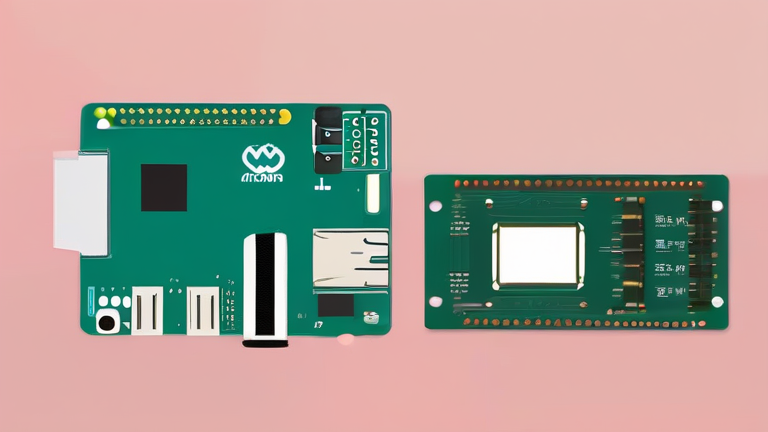
TL;DR: Choose Raspberry Pi 5 for complex, network-centric IoT applications requiring high processing power and operating system support. Opt for Arduino when your project focuses on low-power, real-time sensor interaction without the need for a full general-purpose computing environment.
The Evolving Landscape of Microcontrollers
The Internet of Things (IoT) has matured from a novelty into a critical infrastructure component. As devices become more intelligent and interconnected, the choice between a general-purpose single-board computer like the Raspberry Pi 5 and a microcontroller-based platform like Arduino becomes a pivotal architectural decision. The latest developments in both ecosystems reflect a broader industry shift toward edge computing and specialized hardware acceleration, moving away from cloud-dependent solutions toward localized data processing.
If you want to dig deeper, check out our guide on Raspberry Pi 5 vs Jetson Orin Nano: Which Edge AI Board Wins.
Specs and Performance: A Technical Deep Dive
The Raspberry Pi 5 represents a significant leap forward in performance, featuring a quad-core Arm Cortex-A76 processor running at 2.4 GHz. This substantial increase in clock speed, combined with the new VideoCore 7 GPU and support for PCIe, allows the Pi 5 to handle complex data analytics, image recognition, and even light machine learning tasks directly on the device. Its 8GB of RAM option further solidifies its role as a capable mini-computer capable of running a full Linux distribution, making it ideal for projects that require web interfaces, database management, or sophisticated sensor fusion.
In contrast, the Arduino ecosystem, particularly with newer boards like the Mega 2560 or the ESP32-based variants, remains focused on deterministic, low-latency tasks. While the ESP32 has bridged the gap by adding Wi-Fi and Bluetooth capabilities, it lacks the raw processing muscle and memory bandwidth of the Raspberry Pi. Arduino boards excel in precise timing, direct hardware interfacing, and ultra-low power consumption. They are the preferred choice for battery-operated nodes, simple input/output tasks, and applications where boot time and system overhead must be minimized.
Industry Impact and Ecosystem Maturity
The industry impact of the Raspberry Pi 5 extends beyond hobbyist projects into industrial automation and education. Its ability to handle AI workloads at the edge reduces bandwidth costs and latency, making it a viable option for smart surveillance and predictive maintenance systems. The robust Python and C++ libraries available for the Pi allow developers to rapidly prototype and deploy complex software stacks. Conversely, the Arduino community continues to dominate in embedded systems where reliability and simplicity are paramount. The vast repository of shields and libraries ensures that developers can quickly implement specific hardware interfaces without extensive driver development.
From a supply chain perspective, the Raspberry Pi faces periodic shortages due to high demand, whereas Arduino-compatible boards offer more varied manufacturing sources. This diversity in supply is a critical factor for large-scale production runs. However, the Pi’s standardized form factor and peripheral integration offer a cleaner, more modular design approach for consumer-facing IoT products, reducing the complexity of external circuitry.
Final Verdict
Ultimately, the decision hinges on the project’s computational requirements. If your IoT device needs to process data locally, run a graphical interface, or integrate with cloud services seamlessly, the Raspberry Pi 5 is the superior choice. If your device is a simple sensor node, requires minimal power, or needs to respond to hardware events with microsecond precision, an Arduino platform is more appropriate. Many advanced projects even utilize both, with the Arduino handling raw sensor data and the Pi performing high-level processing, demonstrating the complementary nature of these technologies in modern IoT architecture.
FAQ
Q: Can I use a Raspberry Pi 5 for simple sensor projects?
A: Yes, but it is often overkill. The high power consumption and complex OS setup are unnecessary for basic tasks that an Arduino can handle more efficiently and with lower cost.
Q: Which board is better for battery-powered devices?
A: Arduino-based microcontrollers are generally better for battery-powered devices due to their lower idle power consumption and simpler power management requirements compared to the Raspberry Pi.
Q: Do I need to know programming for either board?<br
Leave a Reply