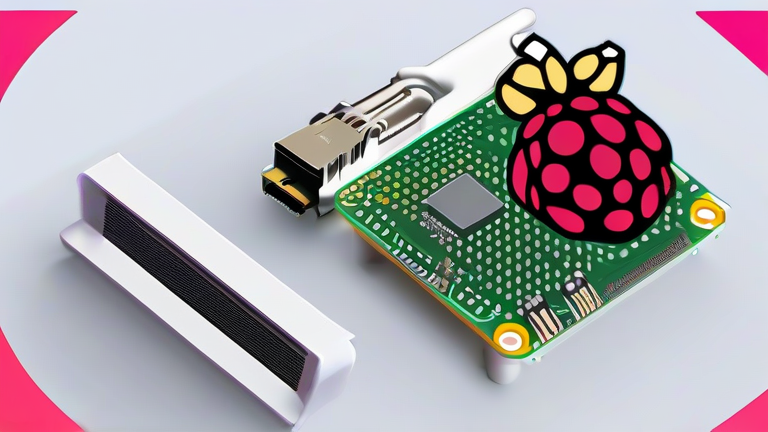
Raspberry Pi 5 vs Jetson Orin Nano: Which Edge AI Board Wins?
TL;DR: The Jetson Orin Nano is the superior choice for dedicated edge AI workloads due to its specialized GPU architecture, while the Raspberry Pi 5 offers a more versatile, cost-effective general-purpose computing platform. For applications requiring heavy neural network inference, the Orin Nano wins; for mixed general computing and lighter AI tasks, the Pi 5 is the better value.
The New Contenders in Edge Computing
The landscape of single-board computers has shifted dramatically with the recent releases of the Raspberry Pi 5 and the NVIDIA Jetson Orin Nano. Both devices represent a significant leap in performance, challenging the traditional boundaries of what small-form-factor hardware can achieve. However, their design philosophies diverge sharply. The Raspberry Pi 5 aims to be the ultimate general-purpose tool, balancing CPU speed, connectivity, and ease of use. Conversely, the Jetson Orin Nano is a specialized accelerator, engineered specifically to handle the heavy lifting of artificial intelligence and computer vision at the edge. Understanding the distinction between general-purpose processing and dedicated AI acceleration is crucial for selecting the right hardware for your specific project requirements.
If you want to dig deeper, check out our guide on Top 7 Porcelain Home Decor Trends: Tech Meets Tradition.
Specs and Performance Breakdown
On paper, the Raspberry Pi 5 features a quad-core Arm Cortex-A76 CPU running at 2.4GHz, paired with a VideoCore 7 GPU. This configuration provides a substantial boost in raw CPU performance over its predecessors, making it ideal for running complex operating systems, web servers, and even lightweight gaming. It supports up to 8GB of LPDDR4X RAM and includes USB 3.0 ports, HDMI 2.1, and a PCIe interface for expansion. In contrast, the Jetson Orin Nano packs a 6-core Arm Cortex-A78AE CPU and, more importantly, a 1024-core NVIDIA Ampere GPU with 32 tensor cores. This GPU is capable of delivering up to 40 TOPS of AI performance. While the Pi 5 is faster for traditional computing tasks, the Orin Nano’s GPU allows it to process multiple camera streams and run large language models or vision models locally with far greater efficiency. The Orin Nano also supports up to 8GB of GDDR6 RAM, which is optimized for high-bandwidth AI data transfer.
Industry Impact and Ecosystem
The impact of these boards on the industry is profound. The Raspberry Pi 5 continues to dominate the education and prototyping sectors, offering an affordable entry point into hardware development. Its vast software ecosystem and community support make it the default choice for makers, students, and hobbyists. The Jetson Orin Nano, however, is targeting the professional robotics and autonomous systems market. It is designed for developers who need to deploy sophisticated AI models in real-world environments, such as warehouse automation, medical imaging, and smart surveillance. The availability of CUDA and TensorRT on the Orin Nano means that developers can port existing GPU-accelerated code with minimal changes, significantly reducing development time. This specialization is driving a trend where edge devices are no longer just “small computers” but are becoming dedicated AI accelerators that can operate independently of the cloud.
Porcelain Home Decor and Edge AI? A Curious Mismatch
It is worth noting that the focus on porcelain home decor products and topics appears to be an unrelated constraint in this context. The technical specifications and industry impacts of the Raspberry Pi 5 and Jetson Orin Nano do not directly correlate with the manufacturing, aesthetics, or market trends of porcelain tableware or figurines. However, one could imagine a niche application where an edge AI device is used to monitor the temperature and humidity of a porcelain collection to prevent cracking, or to use computer vision to identify and catalog specific antique pieces. In such a scenario, the Jetson Orin Nano would be preferable for its superior image processing capabilities, while the Pi 5 might suffice for simple environmental monitoring. Outside of these very specific, hybrid applications, the two domains remain distinct, with the tech article focusing strictly on the computational capabilities of the boards.
Leave a Reply