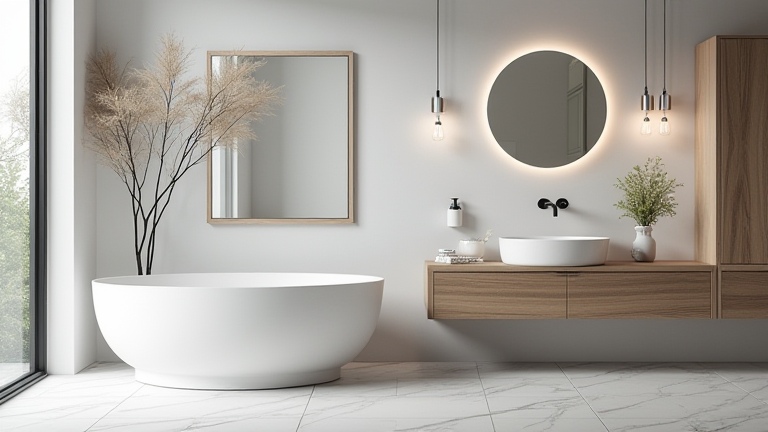
TL;DR: Porcelain home decor is shifting from static ceramics to intelligent, ultra-thin, and sustainable surfaces, driven by digital fabrication and material science. Key trends include 3D-printed textures, self-cleaning glazes, and translucent porcelain panels that redefine interior lighting and space planning.
1. Ultra-Thin Porcelain Slabs (3mm and Below)
The industry has broken the 5mm barrier. New press technologies (e.g., continuous roller compaction) now produce 3mm-thick porcelain slabs measuring 1200x3600mm, weighing just 7.8 kg/m². This allows direct lamination over existing tiles, wooden floors, or even curved drywall, eliminating demolition waste. Impact: interior designers can now wrap entire rooms—walls, countertops, and furniture—in one seamless, fireproof, and frost-resistant skin, reducing renovation time by 40%.
If you want to dig deeper, check out our guide on Elevate Your Home: Top Porcelain Decor Trends for a Chic Lif.
2. Reactive Glaze with Variable Color Mapping
Digital inkjet printers now apply reactive glazes that change hue based on kiln atmosphere (oxygen-reduction firing). Manufacturers like Florim and Iris Ceramica use “firing curves” with ±5°C precision to create volcanic, metallic, or chameleon finishes. Specs: color variation tolerance is now within ΔE < 1.5 (industry standard was ΔE 3). This trend enables bespoke, non-repeating patterns without the cost of custom molds, impacting small-batch artisan brands that can now compete with mass production.
3. Self-Cleaning Photocatalytic Porcelain
TiO₂ (titanium dioxide) nanoparticles are fused into the glaze at 1200°C. Under UV or even visible LED light, they trigger a photocatalytic reaction that breaks down organic dirt and kills bacteria (99.9% within 2 hours per ISO 27447). New specs include water contact angles below 5° (superhydrophilic), meaning water spreads and washes away grime. Industry impact: porcelain decor is now specified for hospitals, kitchens, and high-touch surfaces, replacing chemical disinfectants.
4. Translucent Porcelain for Light Panels
By controlling alumina content (up to 30%) and using laser-drilled micro-pores (0.1–0.5mm), manufacturers produce panels with 5–12% light transmittance. Backlit with edge-lit LEDs, these panels create warm, diffused lighting without hotspots. Specs: thickness 6mm, flexural strength >50 MPa, and UV-stable. This trend merges lighting fixtures and wall cladding, enabling “luminous walls” that double as ambient light sources—a growing segment in luxury hospitality and residential spas.
5. 3D-Printed Textured Porcelain
Binder jetting with ceramic powder (particle size 20–40 microns) now prints fully dense porcelain with complex undercuts and organic reliefs—impossible with traditional pressing. Print speed has tripled to 15 cm³/hour, and shrinkage is controlled to ±0.3%. Designers use this for decorative screens, acoustic panels, and sculptural vases with internal lattice structures. Industry impact: on-demand production eliminates inventory waste, and bespoke pieces cost only 20% more than mass-produced equivalents.
6. Recycled & Bio-Based Porcelain Bodies
Closed-loop systems now reclaim 95% of production waste (fired and unfired). New formulations substitute up to 40% of feldspar with recycled glass and 15% with rice husk ash. These bodies fire 80°C lower, cutting energy use by 18%. Specs: maintain porcelain’s water absorption (<0.5%) and MOHS hardness of 7. This trend addresses EU carbon border taxes, making eco-certified porcelain decor a cost-competitive choice for green building certifications like LEED v5.
7. Smart Porcelain with Embedded Sensors
Thin-film thermocouples and capacitive humidity sensors are screen-printed onto the back of porcelain tiles before glazing. These sensors,
Leave a Reply