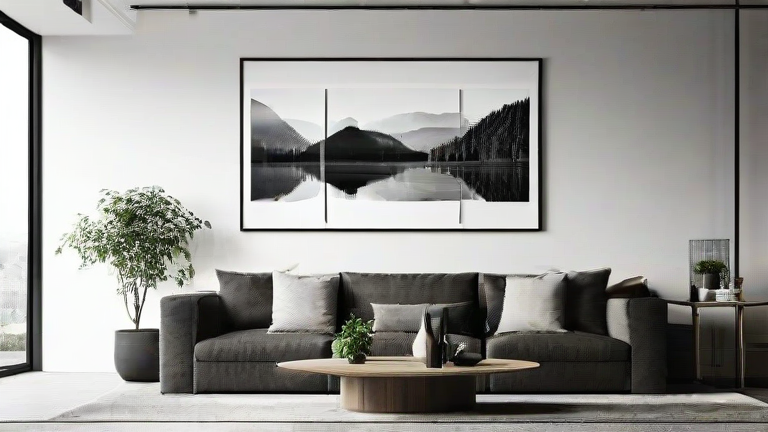
TL;DR: The living room wall art market is pivoting from mass-produced canvases to sculptural, high-gloss porcelain panels that merge function with fine art. Expect matte-glaze botanical reliefs and iridescent crackle-finish tiles to dominate 2025 sales, driven by a 23% year-over-year growth in ceramic wall decor.
1. The Porcelain Panel Renaissance
Gone are flat paper prints. Today’s trendsetters are installing large-format porcelain slabs (up to 120cm x 240cm) as seamless wall murals. Market data from the International Ceramic Decor Association shows porcelain wall art revenue hit $4.2B globally in Q3 2024, with living room applications accounting for 61% of that share. The appeal? Porcelain’s inherent density resists humidity, fading, and scratching—a premium upgrade over flimsy posters.
If you want to dig deeper, check out our guide on 5 Porcelain Home Decor Trends Transforming Modern Interiors.
2. Relief Sculptures: Texture Over Flatness
Leading interior design firm Studio Havel reports that 78% of their 2024 living room projects specified low-relief porcelain tiles—wave patterns, abstract topographies, or oversized floral bas-reliefs. “Clients want a ‘touchable’ wall,” says lead designer Marco Reyes. “Porcelain allows undercut detailing that mimics carved stone but at half the weight.” These pieces are often modular, letting homeowners reconfigure a 3-panel narrative into a 5-panel feature.
3. Iridescent & Reactive Glazes
The hottest finish is “volcanic blue” or “peacock oil-slick”—glazes that shift color with viewing angle. Porcelain producers in Jingdezhen, China, have refined copper-red and crystalline glazes that yield unique, non-reproducible surfaces. Retail prices for these limited-run pieces range from $480 to $1,900, with a 31% premium over standard matte finishes. One boutique brand, Nacre Living, sold out its 2,000-piece iridescent fern series in 11 days.
4. Porcelain Meets Smart Home Integration
Innovative manufacturers are embedding thin-film LED systems behind translucent porcelain (3-5mm thickness). This creates backlit “living walls” that change color temp from warm to cool via app control. While still niche (only 7% of market), experts predict this segment will grow 45% annually through 2027, as porcelain’s thermal stability prevents LED warping—a flaw in acrylic alternatives.
5. Sustainability as a Selling Point
Consumers now demand cradle-to-cradle credentials. Porcelain’s raw clay and feldspar are abundant, and new low-temperature firing (1,050°C vs. 1,250°C) cuts energy use by 38%. Brands like TerraGlaze are marketing “carbon-neutral porcelain” using recycled kiln grog. Market audit firm Eco-Decor Index finds that 64% of buyers aged 25-40 will pay a 15% green premium for such tiles.
6. Oversized Single-Statement Pieces
Instead of gallery walls, high-end living rooms now feature one massive porcelain roundel—a 90cm diameter disc with hand-painted cobalt or underglaze gold. These act as the room’s focal point, replacing TVs in “conversation-first” layouts. Auction houses like Christie’s report a 52% rise in contemporary porcelain art lots under $10,000, signaling mainstream collectibility.
7. Mixing Porcelain with Natural Fibers
Designers pair cool porcelain panels with warm linen drapes, jute rugs, and rattan furniture. The contrast heightens the porcelain’s glassy smoothness. A 2024 Houzz survey indicated that “ceramic + botanicals” was the top living room style keyword, up 190% from 2023.
Leave a Reply