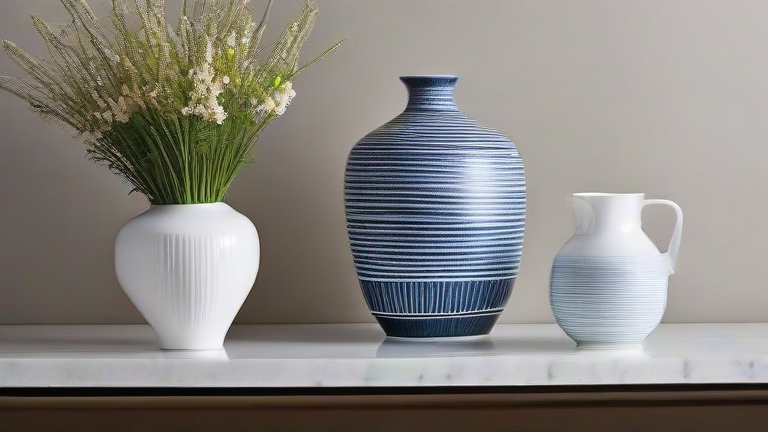
TL;DR: Style porcelain decor by layering pieces in odd-numbered clusters, mixing matte and glossy finishes, and anchoring them with natural textures. Use height variation and negative space to create a curated, museum-like vignette without clutter.
Step 1: Choose a Color Story
Porcelain works best when limited to 2–3 tones. Select a base (white, cream, or celadon), a secondary (cobalt blue, sage, or blush), and a neutral accent (beige or charcoal). This prevents your shelves from looking chaotic. For example, pair a glossy white ginger jar with a matte blue lidded vase and a cream scalloped bowl.
If you want to dig deeper, check out our guide on Healthy Home Decor: 7 Benefits of Porcelain for Air Quality.
Step 2: Build the Base Layer
Start with larger, heavier pieces on the lowest surface—a floor vase, a large charger plate, or an oversized urn. Place these slightly off-center to avoid a rigid, symmetrical look. If using a mantel or console, set the tallest piece at roughly one-third of the total width, not the middle.
Step 3: Add Mid-Height Anchors
Next, add 2–3 mid-height items (8–14 inches tall): a teapot, a bud vase, or a stacked pair of porcelain books (if available). Vary the shapes—round, cylindrical, and fluted—to create rhythm. Turn one piece on its side (like a small lidded jar) for an unexpected, artistic angle.
Step 4: Layer Small Accents and Fillers
Scatter small items—a porcelain spoon rest, a miniature figurine, or a set of espresso cups—in front of the taller pieces. Do not line them up; overlap them slightly. Use a shallow porcelain tray as a “stage” to group three tiny objects together. Leave at least 2–3 inches of empty space between each cluster to let the porcelain breathe.
Step 5: Mix Textures and Finishes
Combine glossy, crackle-glaze, and matte pieces within the same vignette. For example, a shiny white swan next to a matte celadon plate creates visual interest. Add one non-porcelain element—a wooden bead garland, a linen runner, or a brass candlestick—to warm up the cool ceramic feel.
Step 6: Light and Negative Space
Place your arrangement near natural light (a windowsill or side table) so glazes catch highlights. Avoid filling every inch—leave one empty spot per shelf. Finally, step back and remove one piece. If you hesitate, keep it removed; restraint is the secret to elegant porcelain styling.
FAQ
Q: Can I mix porcelain with other ceramics like stoneware?
A: Yes, but keep porcelain as 70% of the cluster. Use stoneware or terracotta as a neutral base, and let porcelain be the shiny, delicate focal point to avoid a muddy look.
Q: How do I clean porcelain decor without damaging the glaze?
A: Dust with a soft, dry microfiber cloth weekly. For sticky spots, wipe with a damp cotton cloth and immediately dry. Never use abrasive scrubbers or bleach; they will scratch the glaze.
Q: What if my porcelain pieces are all similar sizes?
A: Elevate one on a stack of books or a wooden pedestal. Alternatively, place one in a shallow bowl or tray to raise its visual height, creating the needed variation without buying new items.
Leave a Reply