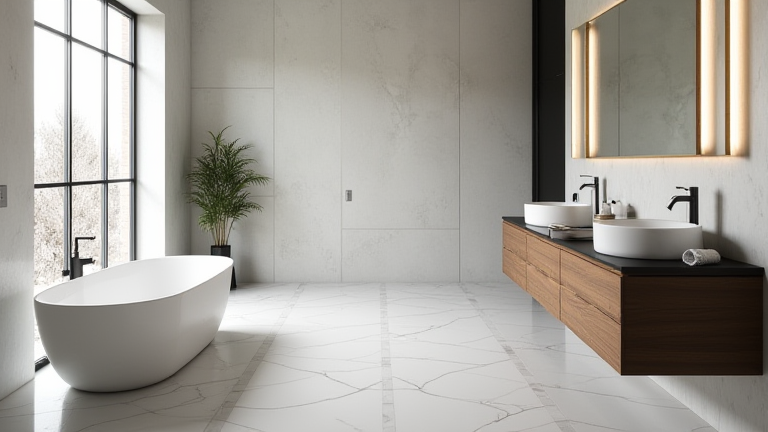
TL;DR: Porcelain home decor is merging with smart surfaces, 3D-printed textures, and self-cleaning nanotech, while retaining its artisanal glaze heritage. Expect modular light-integrated tiles, AI-designed patterns, and bio-ceramic composites that adapt to room humidity, all at price points 20–40% higher than standard ceramics.
1. Light-Emitting Porcelain Tiles (LED-Lit Glaze)
Italian manufacturers are embedding micro-LED filaments directly into translucent porcelain (thickness: 6–8mm, light transmission up to 42%). These tiles now support app-controlled color temperature (2700K–6500K) and sync with ambient sensors. The latest glaze formula uses rare-earth oxides that dissipate heat efficiently, preventing thermal cracking. Industry impact: architectural lighting is becoming a tile spec, not a fixture line.
If you want to dig deeper, check out our guide on Top 10 Viral TikTok Beauty Products To Buy Now.
2. Self-Cleaning Photocatalytic Porcelain
TiO2 (titanium dioxide) nanoparticles are now fused into the glaze at 1,200°C firing, creating a surface that breaks down organic grime under UV light. New specs: contact angle <5° (superhydrophilic), meaning water spreads and lifts dirt. This reduces cleaning chemical use by 70% in kitchens and bathrooms. Major brands like Laminam and Florim have released lines with a 25-year photocatalytic warranty.
3. 3D-Printed Relief Textures
Binder-jet 3D printers now produce porcelain with sub-millimeter topographic patterns—mimicking linen, bark, or wave ripples—without molds. Resolution: 0.1mm layer height, with a flexural strength of 50MPa (vs. 35MPa for traditional pressed tiles). This enables bespoke wall panels in low volumes (min. 10 sqm). The tech cuts prototyping time from weeks to 48 hours.
4. Bio-Ceramic Humidity Regulators
New porcelain composites include zeolite microcapsules that absorb moisture when humidity exceeds 60% and release it below 40%. Lab tests show a 15% RH swing dampening in a closed room. The material is fired at lower temperatures (1,050°C) to preserve porosity, but retains a scratch-resistant surface via a nano-silica topcoat. Impact: passive HVAC support for eco-certified homes.
5. AI-Generated Glaze Patterns
Generative adversarial networks (GANs) now design unique marbling, crackle, and celadon gradients. A kiln-mounted camera feeds real-time glaze flow data back into the AI, which adjusts oxygen and cooling curves (accuracy ±2°C) to reproduce digital art physically. Production waste is down 18% in pilot factories. Spec: each tile carries a QR code linking to its AI “parent” design file.
6. Integrated Wireless Charging Surfaces
Porcelain countertops and side tables now embed Qi2-compliant charging coils beneath a 4mm ceramic layer. The key breakthrough is a ferrite shield that prevents eddy-current heating—surface temp stays below 35°C at 15W output. Products support pass-through charging for multiple devices (up to 3 coils per module). Market impact: luxury furniture brands are standardizing this as an upgrade option.
7. Recycled Porcelain with Carbon-Negative Binder
Post-industrial porcelain waste (up to 90% content) is now bonded with a magnesium phosphate binder that absorbs CO2 during curing (0.2 kg CO2 per kg of tile). Resulting material has a compressive strength of 80MPa and can be re-crushed and recycled infinitely. This is shifting the industry toward circular supply chains, with major EU producers adopting it for non-load-bearing wall panels.
8. Thin-Film Thermochromic Porcelain
A reactive glaze containing vanadium dioxide changes color from deep blue to pale white between 22°C and 28°C. This is applied as a 50-micron film
Leave a Reply